Check out all of our collections!

Attracting Pollinators and Biodiversity
How to attract and support pollinators in your garden
Without pollinators, there would be no food! Bees, butterflies, moths, and birds are important helpers in your garden and unfortunately, their numbers are dwindling worldwide. Supporting your local pollinators will not only help feed your family, but feed the future. Let’s learn more about how to attract pollinators to your garden, boost your land's biodiversity and keep them all coming back.
Biodiversity: The Foundation of a Healthy Garden
A thriving garden is more than just plants. It’s a living, interconnected system and biodiversity is what makes that system strong. Native plants, insects, birds, and soil life have all evolved together over time, each playing a role in supporting the others. When you bring native plants into your garden, you’re not just adding beauty, you’re rebuilding a natural network.
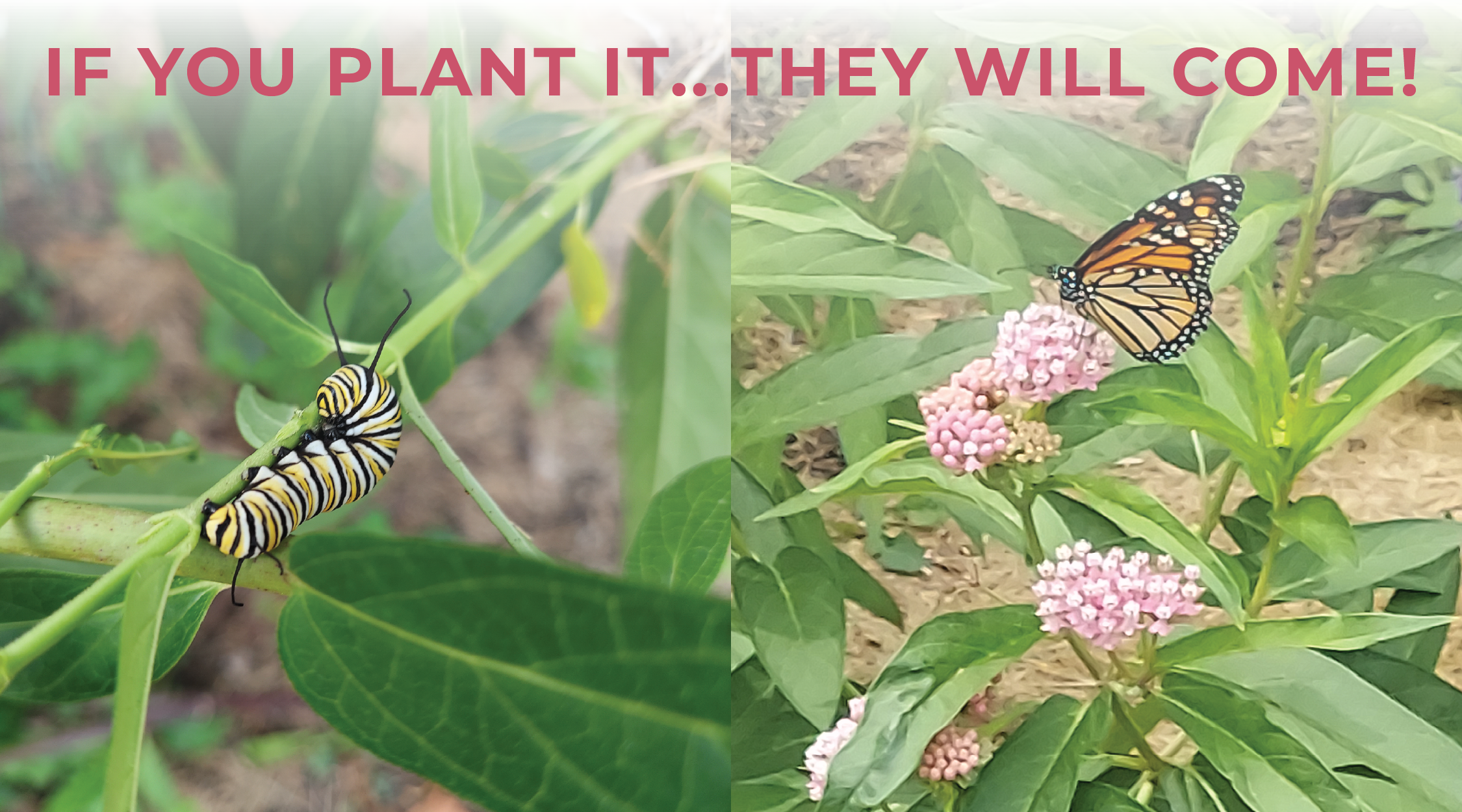
Healthy soil teems with colonies of microbes that help break down nutrients for your plants. Insects pollinate flowers and become food for birds. Birds help control pests and spread seeds. It’s all connected. And the best part? If you plant it, they will come. By creating space for biodiversity, you’re restoring balance and resilience right in your own backyard. Last year I dedicated a corner of my garden to milkweed, salvia, native lavender, and echinacea (cone flowers). It was amazing to see what species came back to our land! Bumblebees by the dozens (falling asleep face first in our salvia flowers like tired toddlers at the dinner table), and several new (to our yard) butterfly species including every life-stage of monarch.
Start with your Soil
While fall is the preferred time of year for soil testing, it is never too late to find out how healthy your soil is before planting. Measuring your macro nutrients, micro nutrients, and pH levels will save you from wasting time and money blindly amending your soil. These results will also help you select the right plants for your garden and give them a greater chance of thriving. Redmond’s Soil Test Kit will give you thorough, digital results and amending instructions in just 6-8 days.
Soil needs an active food web of bacteria, fungi, protozoa, and animals to keep nutrients moving into your plant roots. Infusing your soil with a probiotic is a quick way to boost the life in your dirt and get better results from your above ground planting efforts. Redmond Soil Microbes is a rich, concentrated probiotic of fish manure, worm castings, and beneficial bacteria and fungal strains that you can apply every 7-14 days.
Plan your Garden
There are a lot of options for adding pollinator attracting plants to your garden, no matter how much space you have to work with. Thoughtful planning also helps support a more diverse ecosystem overall. First, map out your sun exposure over a 24 hour period so you know how much sun and shade you are working with. Using your soil testing results to keep track of your soil pH levels will also help with planning your layout.
Flowering Cover Crops:
Cover crops are a great way to fight weed growth, reduce erosion, and store nitrogen in your soil. Flowering cover crops give you all those benefits, plus provide your local pollinators with a more diverse ecosystem for nesting, rest, and food while also feeding beneficial soil life below the surface. Visit Penn State Extension for a list of flowering cover crops pollinators love.
Clusters:
Growing pollinator friendly plants in clusters gives passing insects and birds a greater enticement for visiting your garden. Grouping these plants together in window boxes, garden beds, or raised beds, instead of 1 here or there, creates a stronger visual and ecological signal.
Pollinator strip/wildflower border:
Adding pollinator strips between crops encourages movement throughout your garden, increasing pollination and biodiversity. A perimeter strip or wildflower border can also act as a habitat corridor for insects and birds.
Native lawn/bee lawn:
If your garden is near any lawn grasses, or you have limited room in your garden beds, you can also transition sections of your lawn into a native lawn or a bee lawn. Sprinkle native flowering seeds among turf grasses and stop mowing that section to give your seeds a chance to catch up. Integrating native habitat into your growing area can support more than just passing pollinators, but also create a pesticide free environment for sheltering soil based organisms beneficial insects, and small wildlife, all of which contribute to a balanced ecosystem.
Choose Pollinator Friendly Plants and Seeds
Here are some tips about choosing the right flowering seeds for your growing zone, your soil, and your local ecosystem.
- Don’t just think about spring, but choose plants that will stagger flowering and bring pollinators spring, summer, and fall.
- Choose native plants. Local pollinators and native plants have evolved and developed alongside each other, creating a greater compatibility than you will find with non-native plants. Native plants are: more likely to establish themselves, typically hardier, and more likely to attract pollinators. Non-native or invasive plants can also alter your local ecosystem. Visit the Lady Bird Johnson Wildflower Center for help finding native plants to your region.
- Look around at other yards and natural areas around you for ideas. Use plant identification apps like Plantnet or inaturalist to help you catalog ideas.
- Remember that many flowering herbs can pull double duty as both pollinator plants and harvestable crops: basil, borage (starflower), chives, cilantro, dill, lavender, oregano, mint, rosemary, sage, and thyme.
Bee Friendly Plants
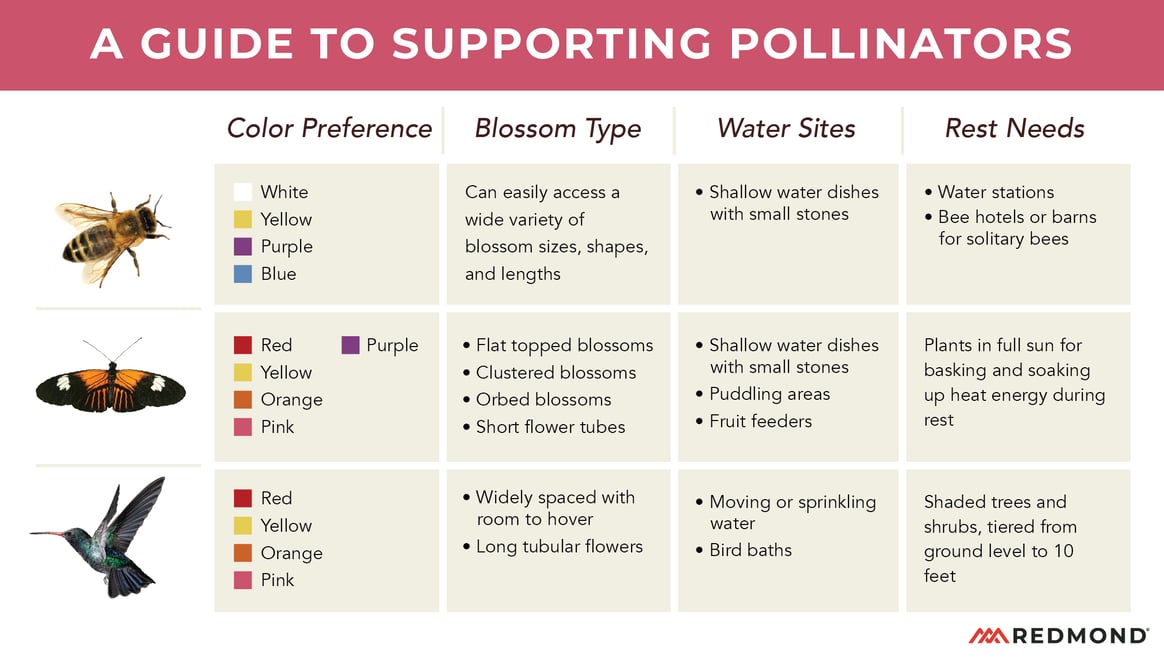
Bees are by far the most adaptable pollinators. There are a wide variety of bee species (with varying tongue lengths) so you can plant many different blossom shapes and sizes. Bees tend to be attracted to white, yellow, purple, and blue blossoms. However, once they stop for a visit, they are more open to other flower colors. Plant a mixture of single blossoms, composites, small florets, and big flowers and see which bees come to feast.
Top Bee Attracting Plants:
- Asters
- Bee balm
- Bee blossom
- Black eyed susan
- Clover
- Coneflowers
- Cosmos
- Crocus
- Flowering herbs (see list above)
- Globe thistles
- Goldenrod
- Hyssops
- Joe Pye Weed (butterfly plant)
- Lupine
- Milkweed
- Phlox
- Poppies
- Rock cress
- Sedums
- Sweet Alyssum
- Sunflowers
Butterfly Friendly Plants
Butterflies have an easier time visiting blossoms that accommodate a larger wingspan. Choose blossoms that are flat topped, clustered, or orbed and that have shorter flower tubes. Butterflies are more attracted to reds, oranges, yellows, pinks, and purples (but may eat from other colors as well).
Top Butterfly Attracting Plants:
- Allum
- Asters
- Bee balm
- Buttonbush
- Butterfly bush
- Coneflower
- Daylilies
- False Indigo
- Fleabane
- Floss flower
- Flowering herbs (see list above)
- Globe thistle
- Goldenrod
- Hollyhock
- Joe Pye Weed
- Lilac
- Lupine
- Mallow
- Milkweed
- Pansy
- Phlox
- Rock cress
- Sedums
- Stonecrop
- Sweet Alyssum
- Zinnia
Butterfly Host Plants:
You can also choose “host plants” that will support caterpillars and the entire butterfly life cycle. Different butterfly and moth species prefer certain host plants.
- Asters
- Butterfly weed
- Columbine
- Dill
- False Indigo
- Host trees: serviceberry, ash, birch, chokecherry, poplar
- Lupine
- Mallows
- Milkweed
- Parsley
- Penstemon
- Roundheaded Bushclover
- Thistles
- Violets
Hummingbird Friendly Plants
Hummingbirds are very active pollinators and, due to their larger size, can transfer more pollen than even the largest bee species. Hummingbirds are especially drawn to red flowers, but are also attracted to oranges, yellows, and pinks. They do best with blossoms that have longer tubular flowers, and that are more widely spaced for hovering maneuvers.
Top Hummingbird Attracting Plants:
- Beard tongue
- Bee balm
- Butterfly bush
- Columbine
- Coral bells
- Iris
- Foxglove
- Honeysuckle
- Larkspur
- Lily
- Lupine
- Petunia
- Phlox
- Red hot poker
- Verbena
Support Pollinators Once They Arrive
Creating a pollinator friendly garden is more than just attracting birds, bees, and butterflies...it’s about providing a place to stay, reproduce, and thrive. Here are some simple steps you can take to make sure they keep coming back, stick around, or hopefully adopt your land as their new home!
Pollinator Water Stations
Bees:
Shallow water dishes with small stones or glass marbles make safe drinking stations for bees. The stones give them perching and landing spots where they can drink without drowning.
Butterflies:
Butterflies, too, need shallow watering stations for safe drinking. You can also make a “butterfly puddler” with sand or dirt, water, perching stones or sticks, and cut up pieces of ripe fruit. You may even find butterflies gathering around puddles or moist areas in your soil where they can get traces of salt and other minerals they need.
Hummingbirds:
Hummingbirds enjoy moving or sprinkling water as well as bird baths for cleaning their feathers. You can put out hummingbird feeders as well with your own nectar mix to keep them coming back even when no flowers are blooming. Just dissolve 1 part white sugar in 4 parts boiling water and let cool before adding to the hummingbird feeder. Don’t use red dyes, but instead use feeders with red on it or attach red labels or ribbons to catch their attention.
Pollinator Resting Needs
Bees:
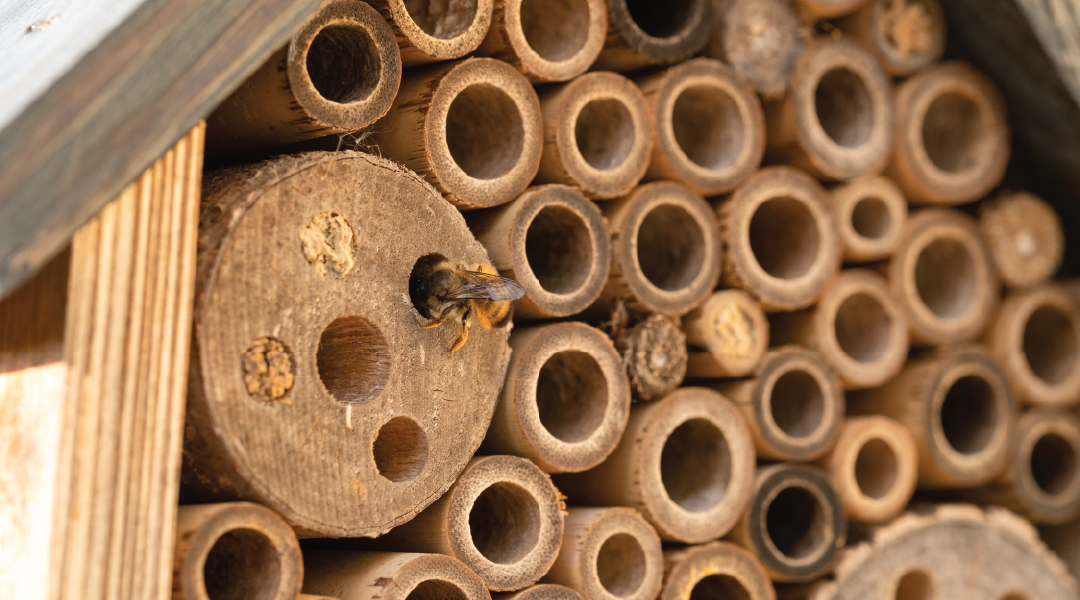
Not all bees have hives or colonies to return home to. In fact, over 90% of bee species are solitary bees and can benefit from resting places in your garden. Bee hotels or bee barns can be made simply with drilled wood, bricks, reeds, cardboard, and other scraps as nesting materials that you may already have lying around.
Butterflies:
Butterflies and moths are cold-blooded and cannot regulate their own body temperature. They need sunny areas where they can bask and absorb heat energy from the sun. If you place their watering plate or puddling station in the sun, they can rest, recharge, and fill up at the same time.
Hummingbirds:
Hummingbirds on the other hand like shaded areas for rest with tiered trees and shrubs anywhere from ground level to around 10 feet high.
Hand pollination
Knowing a few hand pollinating tips can be helpful, especially if you are seeing a lot of flowers and not a lot of maturing fruit in your garden. Hand pollination mimics the natural methods of wind, insects, and birds. Manually pollinating can also help:
- Indoor greenhouse crops and trees (meyer lemons, fig trees, etc.)
- Crops growing outside their typical season (when pollinators may be not active or present)
- Plants with low yield or malformed produce
- Crops growing outside their native habitat (when far away from their specialized pollinators)
When to Manually Pollinate
It is best to hand pollinate crops in the early hours of the morning, when the humidity is highest. Don’t wait too long into the growing season if you suspect your plants need help producing. Keep a watch out for small fruits and buds so you can get an early start on giving them a helping hand.
“Self-Pollinating” Plants
Some crops have flowers that contain both male and female parts and usually only need air disturbance or vibration to move pollen from the pistil to the stamen. These “perfect flower” plants don’t typically rely on insects, but hand pollination can help improve yield. Using a small brush or cotton swab, pollen can be manually transferred (be sure to clean or use different brushes for different crops). Examples of perfect flower crops include:
- Strawberries
- Tomatoes
- Tomatillos
- Peppers
- Beans
- Peas
- Okra
- Eggplant
Plants with Male and Female Flowers
Other crops have separate male and female flowers:
• Monoecious plants: male and female flowers on the same plant (like corn, squash, cucumbers, melons, figs)
• Dioecious plants: male and female flowers on different plants (like asparagus, spinach, kiwi, pistachios, dates) need you to transfer pollen from the male flowers to the female flowers or grown in close proximity for easier pollination. For a deeper dive into different pollination and yield improvement techniques visit the Food and Agriculture Organization.
© 2026 Redmond Minerals Inc.