Check out all of our collections!

Improve Chicken Digestive Health Naturally
Learn how poultry naturally digest food and how to support gut health and production year round.
A healthy flock starts in the gut. When chickens have strong digestive health, they are better able to absorb nutrients, keep their energy up, and stay resilient through stressful times. Prevention is always better than reaction, so let’s learn how poultry naturally digest food and how to support gut health and production year round.
The gut isn’t just for digestion, it's a key part in overall body function and production in chickens, especially immunity:
-
Better nutrient absorption
-
Stronger immunity- Did you know?...70% of a chicken’s immune cells are found in the gastrointestinal tract (GIT)
-
Consistent egg laying (stronger shells)
-
Overall flock resilience
Consistent, natural digestive support matters more than quick fixes; and maintaining mineral and pH balance is the best way to keep your flock’s GIT in tiptop shape.
A Quick Overview of Avian Digestion
Birds use a combination of chemical, mechanical, and fermentative digestion to break down food. Here is a simple overview of this process in your flock. Food and drink pass through the following stages:
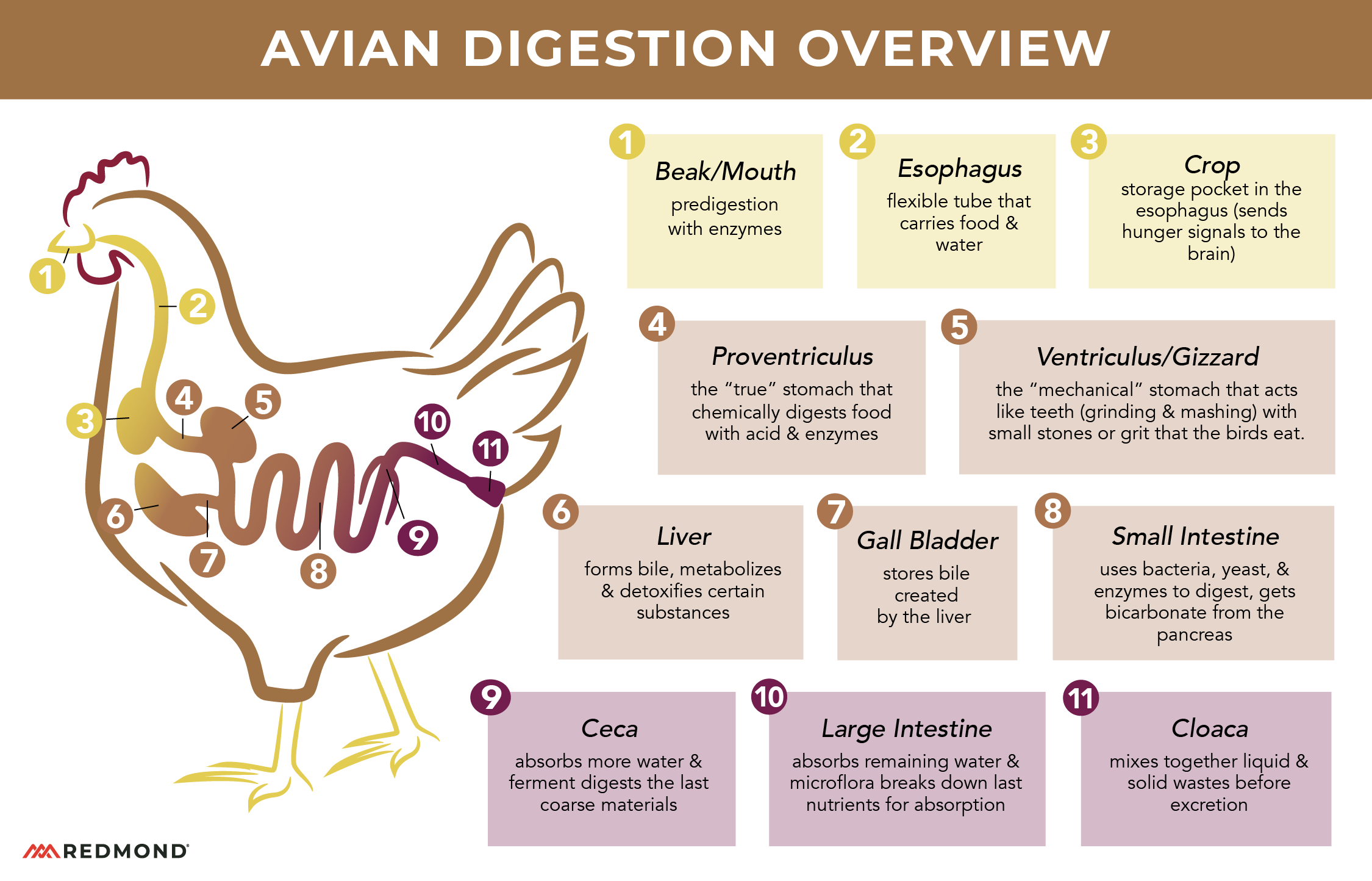
- Beak/mouth- predigestion with enzymes in the saliva (no teeth for chewing)
- Esophagus (gullet)- flexible tube that carries food and water to the crop and proventriculus
- Crop- storage pocket for feed and water within the esophagus (sends hunger signals to the brain when empty). Fun fact…as prey animals, birds evolved to develop this pouch so they can take in a lot of food quickly and then move to a safer location where they can digest.
- Proventriculus- the “true” stomach when food is chemically digested with acid and enzymes
- Ventriculus (Gizzard)- the “mechanical” stomach that acts like teeth (grinding and mashing) with small stones or grit that the birds eat.
- Liver- forms bile, metabolizes and detoxifies certain substances
- Gall Bladder- store the bile created by the liver
- Small intestine- uses bacteria, yeasts, and enzymes to further digest proteins, lipids, and fat soluble vitamins. Here, bicarbonate also balances out the acid from the proventriculus.
- Ceca- absorbs more water and digests the last coarse materials by fermentation.
- Large intestine- absorbs remaining water and gut microflora breaks down last nutrients for absorption.
- Cloaca- mixes together liquid and solid wastes before being excreted
It is important to know that chicks hatch with “sterile” stomachs and have no gut flora. Supplementing with probiotics is a great way to help them kickstart the beneficial bacteria colonies they need before harmful ones have a chance to develop. Over time, they can also naturally build up good gut bacteria by eating some root crops and grains.
How to Improve Chicken Digestive Health Naturally
Use High Quality Feed
Good digestion starts with the feeder. Offering whole, balanced grains over heavily processed options will provide the most gut stability. Watch for feed-related stressors like:
-
Sudden feed changes (transition gradually when changing feeds)
-
Moldy grain
-
Too many treats or scraps
Learn more from the University of Alabama about the nutritional needs of backyard chickens.
Watch for Times of Stress
Stress can wreak havoc on your flock’s gut health, so pay close attention during the following:
-
Molting (growing new feathers is very physically demanding)
-
Heat and bad weather
-
Transportation (moving, adding new birds, shipping for chicks)
-
Excess confinement (during cold weather, transportation, etc.)
-
Illness (note- normal diarrhea is hard to spot in poultry because their solid and liquid waste are combined before excretion)
-
Predator attacks
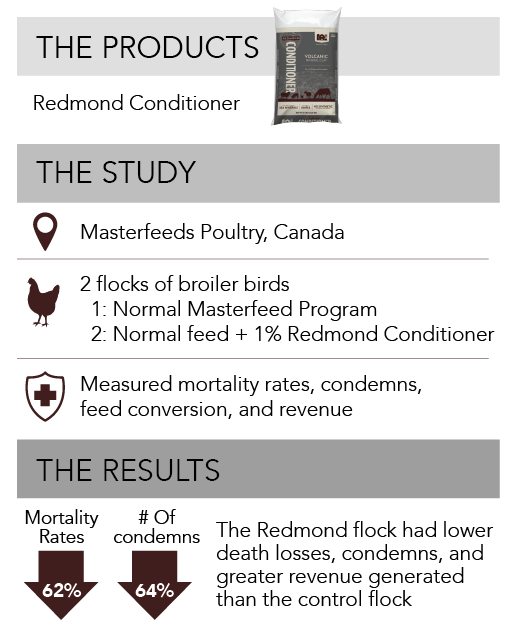
During times of stress, gut supplements like sodium bentonite clay can be easily mixed into feed and protect healthy gut function. Redmond Conditioner is an all natural volcanic clay that helps livestock thrive as it binds to toxins and regulates digestion. Masterfeeds found that Redmond Conditioner even reduced death rates and condemns in their flocks.
 Supplement with Grit
Whole grain fed chickens typically need to eat grit for the mechanical digestion in their gizzard. Free range/pasture raised chickens can usually find their own grit, but you may need to replenish and supplement depending on the size of your flock. Chickens that eat commercially made or highly processed feed usually do not usually need grit to digest. Grit stones are slightly broken down and softened in the acidic proventriculus before moving to the gizzard to help grind feed. Supplementing with insoluble grit helps your flock better break down whole grains to get more nutrients out of their food and shows better weight gain.
Here are some grit feeding tips:
-
For the first few days after hatching, avoid grit or only lightly sprinkle over feed until they learn the difference between grains and grit.
-
Offer grit free choice or mix with feed (it typically does not need to be rationed, poultry will only eat the grit they need)
-
Scale grit size up or down depending on the size of the poultry species.
Mineral Balance: An Often-Missing Piece of Gut Health
Trace minerals provide a lot of support for the entire GI tract:
-
Fuel enzyme activity
-
Protect gut lining integrity
-
Balance microbial colonies
-
Fill in gaps in the diet
Poultry mineral tips:
-
Mineral diversity is better than isolated single-mineral supplementation
-
Natural sea minerals are better than synthetic minerals
Birds need the following macro-minerals (in larger quantities) and micro-minerals (in smaller quantities) to maintain their health.
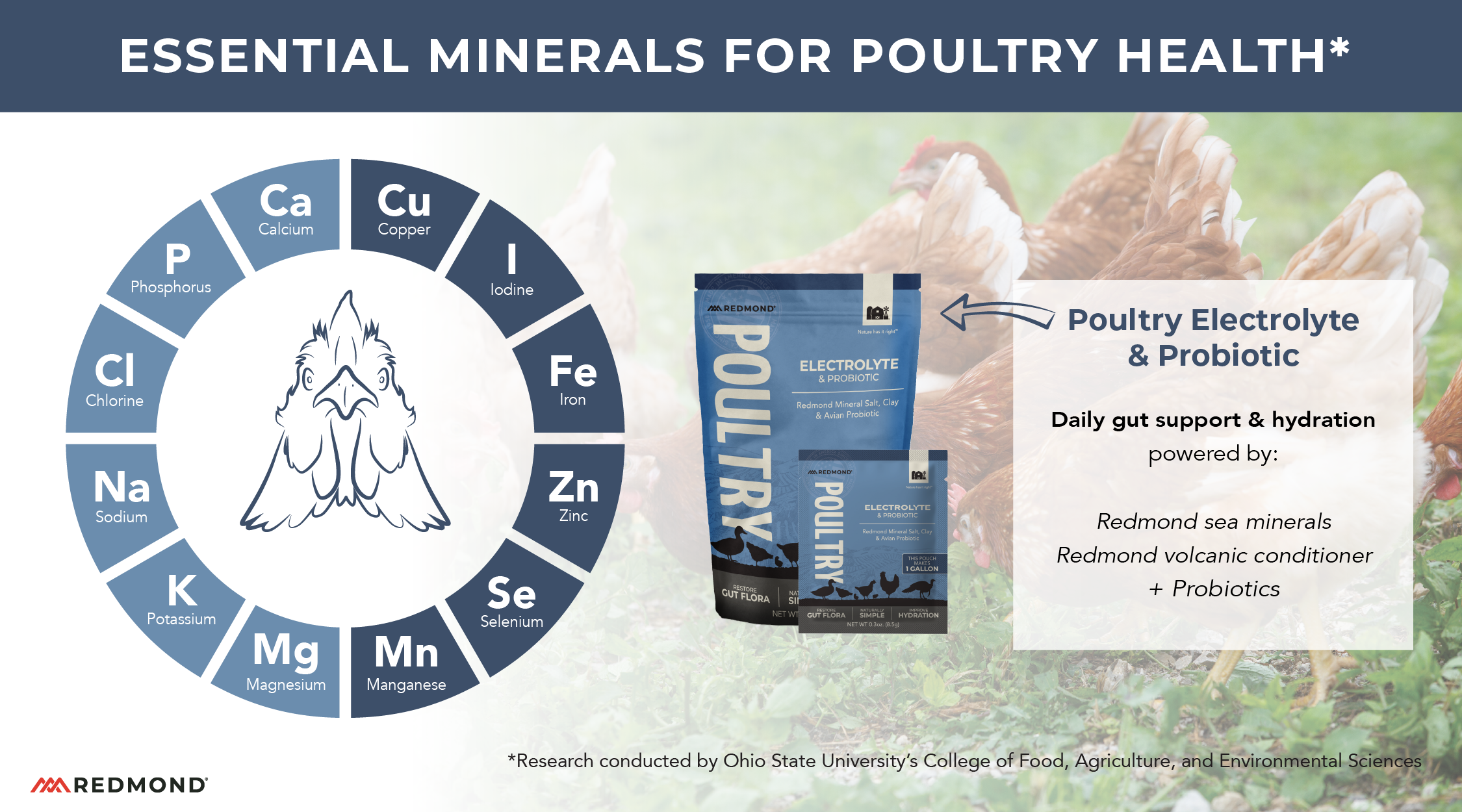
Macro-minerals:
-
Calcium- bone formation, eggshell strength, blood clotting, muscle contraction
-
Phosphorus- bone development, cell membrane, formation, metabolism
-
Chlorine- hydrochloric acid formation in the stomach, aids digestion
-
Sodium, Magnesium, Potassium- Electrolytes for metabolic, muscle, and nerve functions
Micro-minerals:
-
Copper- strengthens connective tissue, metabolic support, immune functions
-
Iodine- Produces thyroid hormones that regulate energy metabolism
-
Iron- Aids oxygen transport within the blood
-
Manganese- prevents cell damage, strengthens bones, helps blood clotting and immune functions
-
Selenium- Reproductive and thyroid gland function, DNA production, and toxin absorption
-
Zinc- Involved in many enzyme-based reactions in the body
See our helpful tips about getting started with backyard chickens.
Clean Water and Hydration Support
Redmond Poultry Electrolyte & Probiotic improves your flock’s resiliency to heat and stress. It contains mineral electrolytes to encourage hydration and probiotics and clay to protect and support gut health. Always provide fresh clean water in addition to electrolyte mixes to keep digestion moving. Poor water quality can negatively impact your chickens’ health:
-
Biofilm buildup- creates a slimy home for pathogens to grow in their water
-
Water aversion- poultry avoiding dirty water can develop mineral imbalances, dehydration, and digestive issues
Redmond has been helping farms and ranches thrives since the 1950s. Our all natural sea and volcanic minerals bring nature's goodness back to your soil, animals, and crops. Give Redmond a call today to see how we can help your farm thrive!